
How Augmented Reality (AR) is Transforming Digital Advertising
Introduction
The digital advertising landscape is always changing. From banner ads in the early 2000s to the rise of social media advertising in the 2010s, each decade introduces new technologies that alter how brands connect with their audiences. Today, Augmented Reality (AR) stands out as one of the most powerful and exciting innovations. Unlike traditional digital ads, AR allows consumers to interactively experience a product rather than just viewing it. This shift from passive consumption to active engagement is reshaping how brands relate to their target markets.
By 2025, AR will no longer feel futuristic; it will become a mainstream advertising tool that companies across various sectors—from retail and fashion to real estate and entertainment—will use to boost engagement and sales. This blog examines how AR is transforming digital advertising, why it matters, and its future directions.
Understanding AR in the Context of Advertising
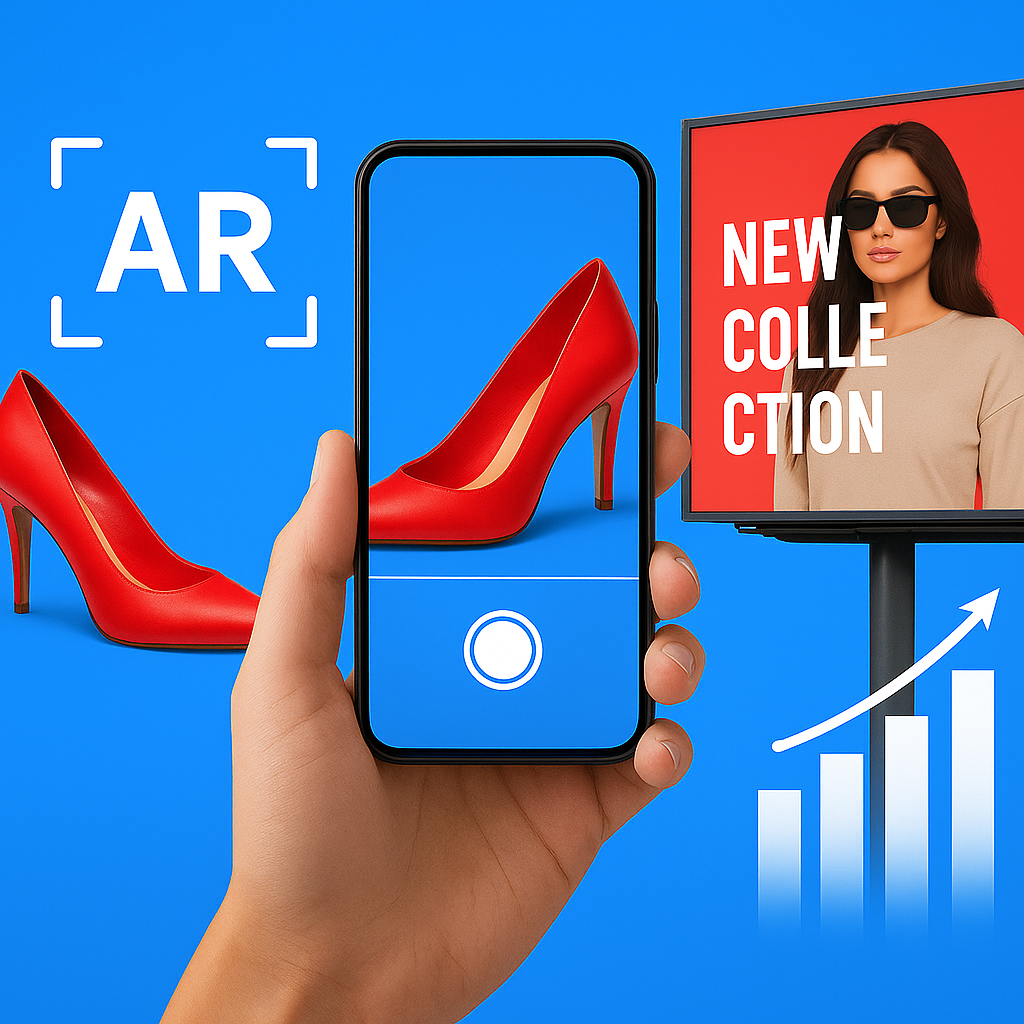
Augmented Reality combines the real world with digital enhancements. Unlike Virtual Reality (VR), which creates a completely immersive digital environment, AR overlays digital content—such as images, 3D models, or animations—onto real-world surroundings using smartphones, tablets, or AR glasses.
In advertising, AR empowers consumers to engage with branded content in their environment. For example:
– A furniture brand like IKEA lets users place a digital sofa in their living room before buying it.
– A cosmetics company like L’Oréal allows customers to “try on” lipstick shades with an AR filter on Instagram or Snapchat.
– A real estate developer can show an entire property virtually without the buyer needing to visit it.
This interactive experience makes AR advertising both innovative and practical, providing benefits to consumers and businesses alike.
Why AR is a Game-Changer for Digital Advertising
- Immersive Customer Engagement
Traditional ads are one-way communications. Consumers see or hear the message, but there is little interaction. AR changes this by encouraging participation. When customers “try before they buy” using AR, they become more emotionally invested in the product, which boosts trust and lessens hesitation.
- Personalization at Scale
AR allows brands to personalize experiences in ways that standard ads cannot. Imagine entering a clothing store’s website where AR shows you how a jacket fits your body type. This level of customization creates greater relevance and improves conversion rates.
- Higher Recall Value
Research shows that people remember interactive experiences much better than static ads. Since AR involves active engagement, customers are more likely to recall the brand, the product, and the overall experience, fostering long-term loyalty.
- Closing the Gap Between Online and Offline
E-commerce often faces the challenge of the “touch-and-feel” gap. Shoppers cannot physically interact with products before buying them. AR helps bridge this gap by bringing elements of the physical store to the digital realm. For instance, Amazon’s AR View lets users see how appliances, furniture, or décor items fit in their homes before placing orders.
Real-World Examples of AR in Digital Advertising
Retail and E-Commerce
Retail brands are leading the way in AR advertising. Sephora’s “Virtual Artist” allows customers to try makeup products using their phone camera. This not only improves the shopping experience but also reduces product returns, which is a major issue for online retailers.
Automotive Industry
Companies like BMW and Porsche use AR apps to let potential buyers visualize cars in their driveways, explore features, and even take virtual test drives. This cuts down on reliance on physical showrooms and broadens customer reach.
Entertainment and Media
AR filters on platforms like Snapchat, TikTok, and Instagram have become essential tools for entertainment marketing. Movie studios use AR effects that let users become their favorite characters or interact with iconic props. This builds excitement and encourages user-generated content.
Real Estate
Real estate developers use AR to showcase buildings before construction. Buyers can explore properties, customize layouts, and visualize designs from their smartphones, making decision-making faster and more informed.
Food and Beverage
Even restaurants are getting involved with AR. For example, Coca-Cola has launched AR-enabled campaigns on vending machines, and pizza chains like Domino’s allow users to design and view their pizzas in AR before ordering.
The Role of Social Media in AR Advertising
Social media platforms play a crucial role in the adoption of AR. Instagram and Snapchat AR filters have become standard in digital marketing campaigns. These filters are interactive and shareable, turning customers into brand advocates.
Moreover, TikTok’s Branded Effects enable companies to create AR experiences that users can remix with their own content, significantly increasing brand visibility. Since social media thrives on trends and virality, AR effects offer a natural way to organically engage audiences.
Benefits of AR Advertising for Businesses
– Increased Conversion Rates: Interactive ads lessen uncertainty, making customers more confident in their purchases.
– Better ROI: Although AR campaigns may need initial investment, the rise in engagement and sales usually outweighs the costs.
– Viral Potential: AR content is naturally shareable, making it more likely to go viral on social media.
– Data Collection: AR campaigns can track user interactions, giving businesses valuable insights into consumer preferences.
– Brand Differentiation: Not all companies have adopted AR yet. Using it now helps brands stand out in a competitive market.
Challenges of AR in Digital Advertising
Despite its advantages, AR also faces challenges.
– High Development Costs: Creating AR campaigns needs specialized skills and software, which can be costly for small businesses.
– Device Compatibility: Not all customers have the latest smartphones or AR-ready devices, limiting reach.
– Learning Curve: Customers unfamiliar with AR may initially find it intimidating.
– Content Saturation: As AR becomes more common, standing out will require creativity and authenticity.
The Future of AR in Digital Advertising
As technology advances, AR will become more accessible, affordable, and effective. By 2030, analysts predict that AR advertising will become as ubiquitous as social media marketing is today. Here are some potential future developments:
– AR Glasses: With Apple, Meta, and Google developing AR wearables, advertising may transition from smartphones to hands-free AR experiences.
– Hyper-Personalized Ads: AI-driven AR ads will adjust in real-time to individual preferences and behaviors.
– AR in Everyday Shopping: Grocery stores, malls, and even street billboards might soon use AR for live product information and promotions.
– Integration with the Metaverse: AR will enhance virtual environments, allowing brands to advertise effortlessly across both real and digital worlds.
Best Practices for Brands Using AR in Advertising
– Focus on Value, Not Gimmicks: AR campaigns should address real customer needs, not just look impressive.
– Keep it Simple: Experiences need to be intuitive and easy to use. Complicated AR ads may discourage participation.
– Leverage Social Media: Combine AR campaigns with social media to encourage sharing and extend reach.
– Test and Optimize: Regularly assess engagement metrics to refine AR strategies.
– Blend Online and Offline: Use AR to create seamless connections between digital campaigns and in-store experiences.
Conclusion
Augmented Reality is more than just a buzzword—it is a game-changing force in digital advertising. By facilitating immersive, interactive, and personalized experiences, AR connects online and offline shopping, builds trust, and boosts engagement. While challenges like cost and accessibility still exist, the rapid pace of technological progress ensures that AR will soon become a standard advertising tool.
For businesses, the message is clear: those who adopt AR today will not only stand out in 2025 but also gain a competitive advantage in the years ahead. The key is to use AR wisely, focusing on customer value, creativity, and seamless integration with broader marketing efforts.